
Mosquito Coils May Trigger Breathing Disorders In Children, Say Paediatricians
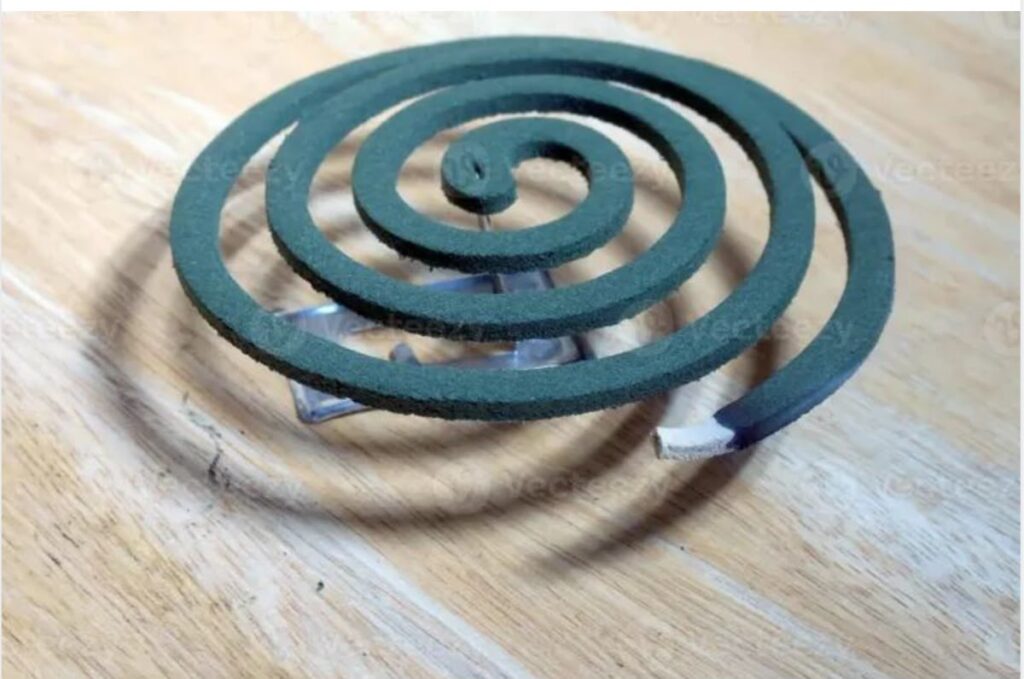
Paediatricians have warned that children who sleep in rooms where mosquito coils are burning may be exposed to smoke and pollutants capable of irritating their airways and triggering breathing difficulties, particularly in poorly ventilated spaces.
The specialists explained that children are more vulnerable to the effects of indoor air pollutants because their airways are smaller and still developing. Younger children also spend longer hours asleep, potentially increasing the duration of their exposure to mosquito coil smoke.
Although mosquito coils are widely used to repel mosquitoes, the paediatricians cautioned that burning them indoors can release particulate matter and other pollutants into the air, making prolonged exposure potentially harmful, especially for children with existing respiratory sensitivities.
The World Health Organisation has linked household air pollution to serious health risks, particularly among children. It estimated that household air pollution was responsible for 2.9 million deaths globally in 2021, including more than 309,000 deaths among children under five. The WHO also stated that 44 per cent of pneumonia deaths among children under five are attributable to household air pollution.
However, the WHO figures cover household air pollution from several sources, including polluting fuels and technologies used for cooking, heating and lighting, and should not be interpreted as deaths caused specifically by mosquito coils.
A study published in the journal CHEST found that burning mosquito coils in a closed bedroom for six hours generated high levels of fine particulate matter. The study recorded average PM2.5 concentrations of 1,031 microgrammes per cubic metre, with peak concentrations reaching 1,613 microgrammes per cubic metre.
The researchers also recorded carbon monoxide levels averaging 6.50 parts per million, with peaks of 10.27 parts per million. They noted that improved ventilation significantly reduced the concentration of pollutants in the room.
The concern is particularly significant in Nigeria, which carries a heavy burden of malaria. The WHO reported that Nigeria accounted for 31.9 per cent of malaria deaths in the WHO African Region in 2024, while children under five accounted for about three quarters of malaria deaths in the region.
A Nigerian study examining carbon monoxide emissions from mosquito coils also found that three of the five brands tested exceeded the Nigerian Federal Ministry of Environment and WHO indoor carbon monoxide limit of nine parts per million under different bedroom conditions. The study further found that exposure levels varied according to room size.
The Head of Paediatrics at the Federal Teaching Hospital, Katsina, Dr Abdurrazzaq Alege, explained that pollutants released from burning mosquito coils could remain trapped in enclosed rooms and subsequently be inhaled by children.
“When you have an enclosed environment, these chemicals tend to stay longer inside,” Alege explained.
The consultant paediatrician said exposure to the pollutants could cause symptoms including coughing, noisy breathing and difficulty breathing.
“Typically, all these chemicals enter the airway and cause irritation. This can result in defensive coughing, or you are having difficulty breathing, or having noisy breathing,” he stated.
Alege noted that younger children could be particularly vulnerable because of the size and developmental stage of their airways.
“The child has a smaller airway. His airway is narrower. Apart from being narrower, the younger infant’s airway is still developing,” he stated.
He added that children’s longer sleeping hours could also increase the duration of their exposure to the smoke.
“The child spends a longer time in bed. That is because he sleeps longer than the parents,” Alege noted.
According to the paediatrician, children who are predisposed to asthma may experience stronger reactions when exposed to irritants from mosquito coil smoke.
“If the child has the predisposition to be asthmatic, that is because the child will now react to these chemicals when it enters the airway,” he explained.
However, Alege cautioned against concluding that exposure to mosquito coil smoke automatically causes permanent lung damage. He said the more immediate concern for susceptible children was the possibility of triggering asthma attacks.
“To say that it will cause permanent lung damage, no. It doesn’t necessarily cause permanent lung damage. But what will happen is that it causes, it triggers asthma attacks,” he stated.
A Consultant Paediatrician at the Olabisi Onabanjo University Teaching Hospital, Sagamu, Ogun State, Dr Femi Akodu, advised parents to reduce children’s exposure to mosquito coil smoke and adopt safer methods of controlling mosquitoes.
Akodu urged parents to take breathing difficulties seriously and seek medical attention whenever a child develops respiratory symptoms.
“Typically, when the child starts to have, or finds it difficult to breathe, we expect that the child should be attended to, or taken to the nearest health centre,” he advised.
Rather than relying on burning mosquito coils indoors, Akodu recommended alternative mosquito control measures.
“There are mosquito repellents. All these are better than burning the oil in the house,” he stated.
He also encouraged households to eliminate mosquito breeding sites by keeping their surroundings clean and removing stagnant water.
“Empty stagnant water, don’t allow stagnant water around the house. So, all this keeps the environment clean,” he explained.
Akodu further advised parents to keep children away from the home when insecticides are being sprayed.
“But we should be careful that when we spray the house, it should be at the time, at least when children are not around,” he cautioned.
Health experts recommend measures such as the use of mosquito nets and appropriate repellents, adequate ventilation and the elimination of stagnant water around homes to reduce mosquito exposure while limiting children’s contact with smoke and other indoor air pollutants.